Benefits of Dental Implants You Should Know
Dr. Sushma Patne on 10 September, 2026
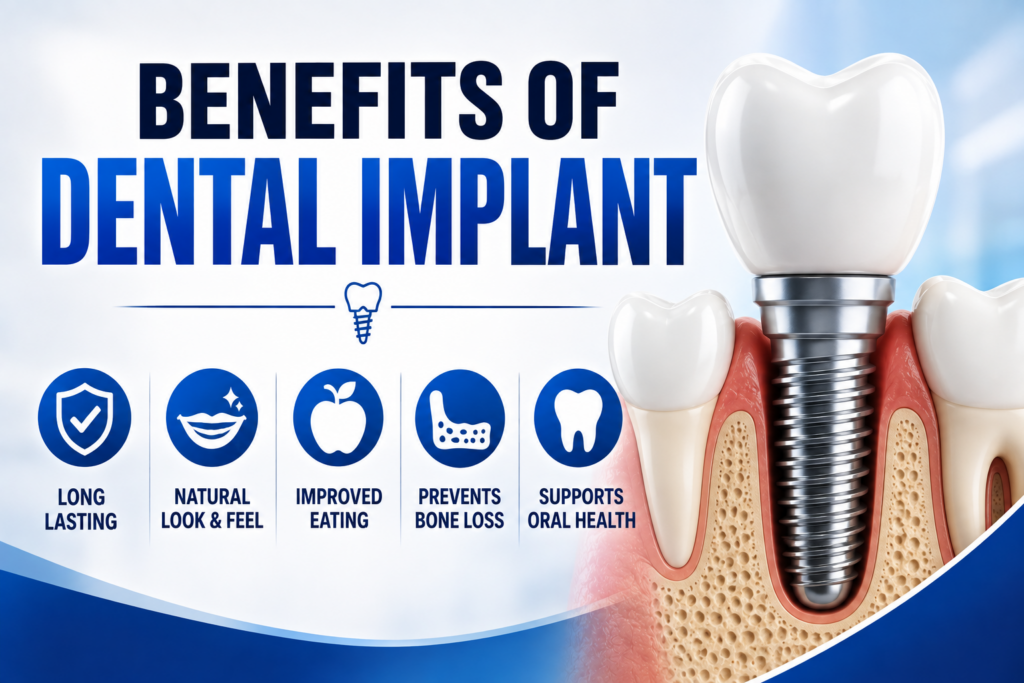
When it comes to replacing missing teeth, dental implants have transformed restorative dentistry. With a remarkable success rate of 95–98%, they have become the preferred choice for patients seeking a durable, natural-looking solution .
As a dentist, I often explain to my patients that choosing a dental implant is not just about filling a gap—it is an investment in their long-term oral health, function, and confidence. This article explores the key benefits of dental implants and explains why they are so important for overall well-being.
What Are Dental Implants?
A dental implant is essentially a replacement for a missing tooth root. It consists of a small titanium post that is surgically placed into the jawbone. Over time, the bone fuses with the implant through a process called osseointegration . This fusion creates a strong, stable foundation for a custom-made crown the visible part of the tooth that is designed to blend seamlessly with your natural teeth .
Key Benefits of Dental Implants
1. Preservation of Jawbone Health (Most Important Benefit)
One of the most critical and often overlooked benefits of dental implants is their ability to preserve jawbone health .
When a tooth is lost, the jawbone beneath it no longer receives the stimulation it needs from chewing. This leads to bone resorption, where the bone gradually shrinks and deteriorates . Over time, this can cause:
- A sunken or aged facial appearance
- Difficulty chewing and speaking
- Increased risk of further tooth loss
- Inability to wear dentures comfortably
Dental implants mimic the function of natural tooth roots. When you chew, the implant stimulates the jawbone, encouraging it to maintain its density and volume . This unique benefit is something that bridges and dentures simply cannot offer.
2. Improved Functionality: Eat, Chew, and Speak with Confidence
Dental implants restore full chewing function, allowing you to enjoy your favorite foods without worry . Unlike dentures that may slip or shift, implants are firmly anchored in the jawbone, making eating and speaking more comfortable and natural .
They also help improve speech. Missing teeth can affect pronunciation, but implants provide a stable foundation that allows for clear and effortless communication .
3. Long-Term Durability and Cost-Effectiveness
With proper care, dental implants can last a lifetime, making them a reliable and cost-effective investment compared to other options . While bridges and dentures may need replacement every 5–10 years, implants are designed for decades of use .
4. Protection of Adjacent Natural Teeth
Dental implants stand independently and do not rely on adjacent teeth for support. This is a major advantage over traditional bridges, which require the grinding down of healthy neighboring teeth . By preserving your natural teeth, implants contribute to better long-term oral stability .
5. Natural Appearance and Boosted Confidence
Because they are custom-made to match the shape, size, and color of your existing teeth, dental implants look and feel completely natural . Restoring a complete smile does wonders for self-esteem. Patients often report feeling more confident smiling, speaking, and interacting in social situations .
6. Comfort and Convenience
Unlike removable dentures, dental implants are permanent. There is no need for messy adhesives, special cleaning routines, or removing them at night . Maintaining them is as simple as brushing and flossing just like natural teeth .
Dental Implants vs. Other Alternatives
| Feature | Dental Implants | Dental Bridges | Dentures |
|---|---|---|---|
| Bone Preservation | Prevents bone loss | No bone stimulation | No bone stimulation |
| Impact on Adjacent Teeth | None | Requires altering healthy teeth | None |
| Durability | 20+ years or lifetime | 7–10 years | 3–7 years |
| Stability | Fixed and stable | Fixed | Can slip or shift |
| Maintenance | Brush and floss normally | Requires special flossing | Requires daily removal and cleaning |
Frequently Asked Questions (FAQs)
Q1. Do dental implants require special care?
No. They require the same care as your natural teeth—regular brushing, flossing, and routine dental checkups .
Q2. Can dental implants prevent bone loss?
Yes. By stimulating the jawbone, implants help maintain bone density and prevent the deterioration that typically follows tooth loss .
Q3. Are dental implants suitable for older adults?
Yes. Age alone is not a determining factor. As long as a person is in good overall health and has sufficient bone density, dental implants can be very effective for seniors .
Q4. How long do dental implants last?
With proper care, dental implants can last 20 years or more, and often a lifetime .
Q5. How soon can I eat after getting dental implants?
Most patients can start eating soft foods within a day or two after surgery. Your dentist will guide you on when it is safe to return to your normal diet .
Q6. Do dental implants improve oral health?
Yes. Implants help keep neighboring teeth from shifting, support proper bite alignment, reduce the risk of bone loss, and contribute to long-term oral health and stability .
Q7. Do dental implants feel like real teeth?
Yes. Once healed, most patients find their implants extremely comfortable and indistinguishable from their natural teeth .